Conundrum: Non-Prime
Tuesday, July 22nd, 2008I’m thinking of a two-digit number that is not a prime, the sum of two primes, or the product of two primes.
What number am I thinking of?
Left-brain fun!
I’m thinking of a two-digit number that is not a prime, the sum of two primes, or the product of two primes.
What number am I thinking of?
We haven’t had one of these in a while…
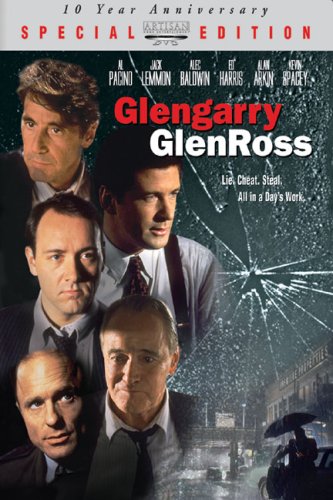
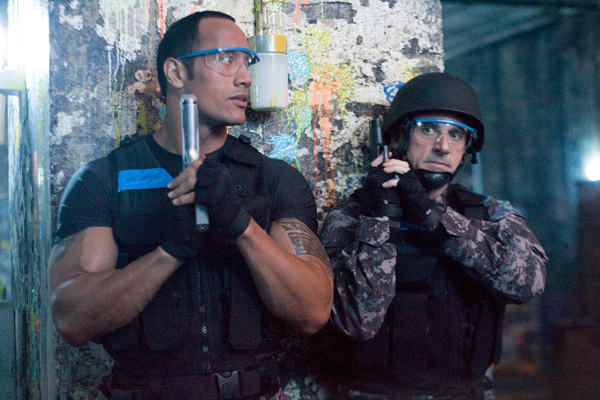
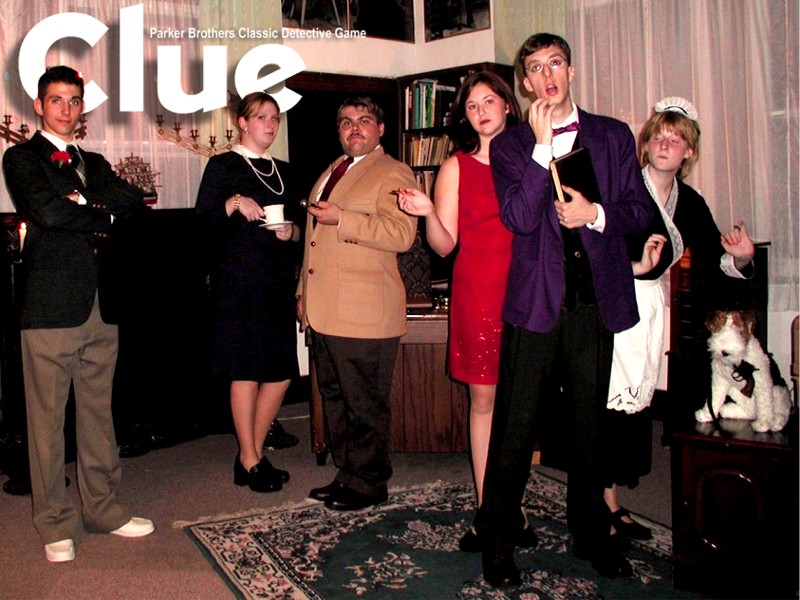
In a normal “Pic Tac Toe” puzzle, there are nine pictures in a 3×3 grid, like Tic-Tac-Toe. In each of the three rows, three columns, and two diagonals, there is a common theme that unites the three pictures. The challenge is to find the eight themes.
In this “Pic Tac Toe” puzzle, however, there are twenty-seven pictures in a 3×3x3 grid, like a Rubik’s Cube. In each of the nine rows, nine columns, nine pillars, eighteen lateral diagonals, and four cross-cube diagonals, there is a common theme that unites the three pictures. The challenge is to find the forty-nine themes.
Imagine stacking the three levels below on top of one another. For reference, and notation guidelines, check out my last 3D Pic Tac Toe, including the comments. The rules here are identical to that puzzle.
You can click on each image to see a larger version:
Please post whatever you come up with in the comments section.
Enjoy!
UPDATE: Correct themes provided by Benjamin Baxter (3), Billie (24), and Neel Mehta (16). Alternate themes suggested by Benjamin Baxter (1), Billie (2), and Neel Mehta (5). See comments for discussion, or click here to skip right to the answers.
You have defeated Iachimo at his own game, and he’s not happy.
“I usually go first,” he says icily. “Surely you will allow me a rematch, and allow me to go first this time.”
You know that, with his standard set up using piles of 1, 2, 3, 4, and 5, he can force a win by going first, so you decline. But he comes up with a surprising offer: you can increase the number of piles.
As before, the piles will start at 1 coin and will increase by 1 coin until the desired number of piles is reached. So if you decide to increase to six piles, the coin amounts must be 1, 2, 3, 4, 5, and 6. You’ve only got a limited number of coins available, so you may not exceed ten piles.
Iachimo will go first and you will take turns drawing coins from the piles. On your turn, you may remove as many coins as you like from any one pile. The winner is the one who takes the last coin and leaves his opponent without a move.
“Double or nothing,” he dares you, with a bit of desperation in his voice. You’re not sure what would happen if you decline. It doesn’t matter, though, since you see a clear path to victory, even allowing Iachimo to go first.
How many piles do you set up? What’s your strategy for winning?
Iachimo likes to hang out at the local tavern, drawing in tourists to play a game of Nim. You don’t like Iachimo. You don’t like him at all. You think he’s a huckster and a con man. You’d like nothing better than to beat him at his own game. You want to beat him at Nim.
In Nim, two opponents take turns drawing from several piles of coins. On your turn, you may remove as many coins as you like from any one pile. The winner is the one who takes the last coin and leaves his opponent without a move. The coins themselves are not on the line, but Iachimo likes to make the game more interesting with a modest wager.
As you enter the tavern, you notice that Iachimo is set up for business. He has stacked five piles of coins, numbered 1, 2, 3, 4, and 5. Each pile has the same number of coins as the pile number: 1, 2, 3, 4, and 5. He sees you coming and amiably offers you a friendly wager which you quickly accept.
“I’ll go first,” you smile, and before Iachimo can object, you make your move.
What’s your first move? What’s your strategy for winning?
1. Eight members of a nine-member family decided to meet for dinner one evening. Each of them arrived separately. The restaurant took down the last name of the first person to arrive and agreed to set up a table.
2. Hildy’s sister-in-law was the only member of the family who couldn’t make it to dinner.
3. Josie’s daughter has a first and last name which begin with the same letter.
4. Lisa’s father, who was the only male to arrive between the two brothers, has a first name that ends with the fifth and third letters of his last name, in that order.
5. Otis is the only person related by blood to everyone who came to dinner. One of his two uncles has a last name that ends with the third letter of Otis’s other uncle’s last name.
6. Paul arrived immediately after his grandson, whose last name begins with four letters in alphabetical order, none of which are identical or even alphabetically consecutive.
7. Rose arrived immediately after her father, whose first and last names share a common second letter, though at least one of the letters of his first name doesn’t appear in any last name in the family.
8. Sean’s brother-in-law’s name is unusual in that his first name consists of letters that span the exact same range of letters in the alphabet as the letters in his last name, even though his last name is twice as long as his first name (for example, the name “Sean” spans the letters “A through S”).
9. Tom arrived immediately after his sister-in-law, who has never married. Her first and last names share a common fourth letter.
10. Tim’s sister-in-law has a maiden name that could be a cryptogram for her last name.
11. No two people who arrived consecutively to dinner share any common letters in their first names.
12. This is a very traditional family: nobody is divorced, and nobody has been married more than once. All couples are heterosexual, all names are gender-appropriate, all married women have taken their husbands’ last names, all children were born in wedlock, and nobody has married any kind of relative. The clues above do not refer to anybody other than the nine family members, either by name or relation. Nobody has a Q anywhere in his or her name, but at least one of the family members has a last name that contains a U.
The table for eight is almost ready, and the entire party has arrived.
For what name should they be listening?
UPDATE: Puzzle solved by Neel Mehta. Solution provided by ArtVark. See comments for answer.
One of my favorite pieces of trivia is that John Adams and Thomas Jefferson died on the same day. What’s truly remarkable about this is that it happened on July 4, 1826, which was the 50th anniversary of the famous signing of the Declaration of Independence. John Adams’s last words are reported to be “Thomas Jefferson survives” - he did not know that his long-time friend and rival had died a few hours earlier. For us, then, knowing that Jefferson died first is an essential part of the story of these great founding fathers.
But what of the founding fathers of Western literature? Recently, we celebrated April 23 as Shakespeare’s birthday, but we also know it as his death day. Shakespeare died in Stratford on April 23, 1616. We do not know the time of his death, or his last words.
Miguel de Cervantes, author of Don Quixote, might likewise be considered one of the founding fathers of Western literature. Cervantes died in Madrid on April 23, 1616. We do not know the time of his death, or his last words.
And yet, it is possible to say, with some degree of certainty, which of the two authors perished first. And that, dear readers, is today’s Conundrum.
Who died first: Shakespeare or Cervantes? How do you know?
Feel free to speculate as to last words too, if that sort of thing amuses you.
UPDATE: Question answered by Neel Mehta. See comments for answer.
The English department at the local university has nine professors. Each has been with the department a different number of years, ranging from the new-hire (zero years), all the way up to the chair who has been with the department for fifteen years. Since the university only hires at the beginning of the school year, the number of years that each person has been with the department can be expressed as a whole number.
This morning, the nine professors divided themselves into three committees and each of these committees held a meeting which lasted all morning. In the afternoon, the nine professors divided themselves into three different committees and each of these committees held a meeting which lasted all afternoon. At no point today did anybody meet with anyone outside of these six committees.
1. Irene met with Adam and Dr. Marshall in the morning, and met with Deborah and Dr. Smith in the afternoon. Both meetings were held in Conference Room A.
2. Dr. Osborne met with Charles and Dr. Kaplan in the morning, and met with Gerald and Dr. Lewis in the afternoon. Both meetings were held in Conference Room B.
3. Dr. Johnson met with Frank and Dr. Rogers in the morning, and met with Elizabeth and Dr. Nelson in the afternoon. Both meetings were held in Conference Room C.
4. Each of the six committees has the exact same combined number of years that the three committee members have been with the department, though no two of the committees are identical.
5. Harold has been with the department longer than Barbara has.
6. After the Shakespeare scholar, who has been with the department exactly four times as many years as Irene has, was hired, nobody else was hired until five years later, when the Romantic poetry expert joined the department.
7. Dr. Kaplan was hired one year before Dr. Peterson and one year after Dr. Lewis. Nobody was hired the year before Dr. Lewis. Nobody mentioned anywhere above has left the department.
The department is currently hiring for a tenure-track position for next year. They offer a competitive salary and an impressive benefits package. To apply for a position, determine the full names of all nine professors, and how many years each has been with the department.
UPDATE: Puzzle solved by ArtVark. See comments for answer.
A new type of game/puzzle for the blog…
I’m thinking of a character from Shakespeare. It’s a speaking role that is given no lines. Who is it?
If you know it, don’t post it yet. If you don’t know it, ask Yes/No questions to try to figure it out. Once you’ve got it, you can help me answer the questions as they come in.
Possible responses:
Yes - The answer to your question is Yes.
No - The answer to your question is No.
Irrelevant - The answer to your question won’t help you solve it.
Faulty Premise - Your question is based on an incorrect assumption.
I Don’t Know - I don’t know the answer to your question.
Misleading - The correct answer to your question would lead you in the wrong direction.
Let’s see how this goes!
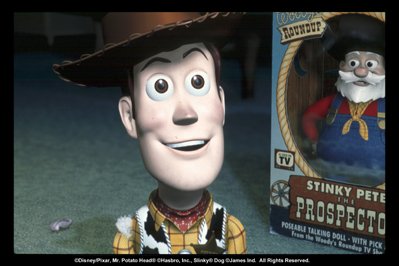
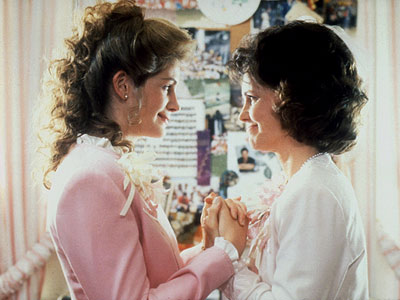
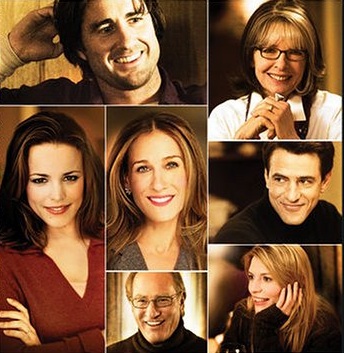
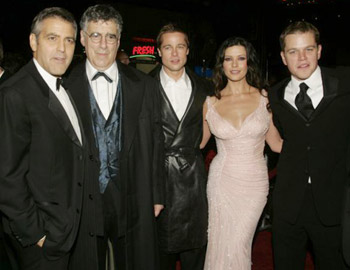
In a normal “Pic Tac Toe” puzzle, there are nine pictures in a 3×3 grid, like Tic-Tac-Toe. In each of the three rows, three columns, and two diagonals, there is a common theme that unites the three pictures. The challenge is to find the eight themes.
In this “Pic Tac Toe” puzzle, however, there are twenty-seven pictures in a 3×3x3 grid, like a Rubik’s Cube. In each of the nine rows, nine columns, nine pillars, eighteen lateral diagonals, and four cross-cube diagonals, there is a common theme that unites the three pictures. The challenge is to find the forty-nine themes.
Imagine stacking the three levels below on top of one another. For reference, and notation guidelines, check out my last 3D Pic Tac Toe, including the comments. The rules here are identical to that puzzle.
You can click on each image to see a larger version:
Please post whatever you come up with in the comments section.
Enjoy!
UPDATE: Correct themes provided by Neel Mehta (35) and Billie (7). Alternate themes suggested by Neel Mehta (2), Econgator (1), and Billie (2). See comments for discussion, or click here to skip right to the answers.
A game is considered to be “solved” when all of the possible moves have been mapped out in a mathematical tree and thus the perfect set of moves can be determined regardless of an opponent’s play.
Tic-Tac-Toe is a pretty easy one. You solved this as a kid. There are three opening moves - corner, edge, center. And then you work from there.
Connect Four was solved in 1988. That’s because those new-fangled computer thingies were starting to get some real power behind them. If you want to play Connect Four against the best opponent you’ve ever played in your life, check out the applet on John’s Connect Four Playground which is programmed to play flawlessly, based on a database of pre-determined best moves. But if you go first, and play just as flawlessly, you can beat it.
Checkers was solved this past April by researchers from the University of Alberta. You can play against Chinook, which will play flawlessly, but the best you can hope for is a draw. It doesn’t matter how amazingly good you are at checkers. You will never win. For me, there’s something a little disturbing about that.
Could chess be next? There are an incredibly large number of possible games, but it must be finite. And if it’s finite, then the tree must conceptually exist even if nobody has been able to come close to mapping it yet. Some see chess playing ability as intutive and creative, and not merely a number cruching process. But if number crunching continues to get better, it might evolve to the point where we get a chess-playing program as unbeatable as Chinook.
To be clear, we’re not talking about a really, really good chess-playing program. We have that now. We’re talking about a program that can access an exhaustive database of pre-determined best moves in order to ensure the most favorable outcome possible.
What do you think?
Will computers ever solve chess?