Archive for the 'A List' Category

My ten favorite posts!

Top Ten Shakespeare Retrochronisms

Wednesday, October 3rd, 2012

Don’t worry if you don’t know what a retrochronism is. I just made the word up. But feel free to throw it around at the dinner table and the water cooler; it’s a thing now.

Let’s say an author from an earlier time period uses a term in a sense that’s appropriate to that author’s time period. Then, the author dies and the language evolves. New technologies are invented. Culture shifts. Later readers or audiences then interpret the term as used by the author through the lens of their own time period, and incorrectly think it means something entirely different from what the author could have possibly intended. That’s a retrochronism!

This is not to be confused with an anachronism, a term generally used to describe instances where an author uses something from his own time in a work that is set before that thing would have been possible or appropriate. Shakespeare has many such anachronisms, such as the clock striking in Julius Caesar. But a retrochronism is different. It isn’t a mistake by the author; it’s an accident of history.

We’ve had 400 years now to develop a few good examples for Shakespeare. The quintessential example is from Romeo and Juliet:

JULIET: O Romeo, Romeo! wherefore art thou Romeo?

Most readers of this blog probably know that “wherefore” means “why” and not “where.” But this is far from obvious, and many newcomers to Shakespeare, entering his world through this play, assume she’s searching for him from her balcony. Who says “wherefore” anymore?

Another common example can be found in Hamlet:

HAMLET: Madam, how like you this play?

QUEEN: The lady doth protest too much, methinks.

HAMLET: O! but she’ll keep her word.

In Shakespeare’s time, “protest” meant to promise. But today we think of it in the opposite sense of a denial. So when people quote the line, they often mean that a person is denying something so much that it must be true. But Gertrude meant that the lady was promising so much that it must be false!

Those two examples are probably the most well known, but below are my ten favorites, culled from years of introducing kids to Shakespeare and from my own journey of working through the language.

TEN. Was Doll Tearsheet a One-Percenter?

DOLL: A captain! God’s light, these villains will make the word captain as odious as the word ‘occupy,’ which was an excellent good word before it was ill sorted: therefore captains had need look to it.

Playgoers who have attended productions of Henry IV, Part Two in the past year must have been taken aback by this statement, possibly even suspecting editorial interference for political purposes.

But in Shakespeare’s time, the word “occupy” was slang for having sex with someone. It’s enough to make you wonder what was really going on at Zuccotti Park after hours.

NINE. Did the Witches prophesy Kitty Hawk?

FIRST WITCH: Here I have a pilot’s thumb,
Wrack’d as homeward he did come.

Most modern audiences are familiar with the word “pilot” as meaning someone who flies an airplane, obviously not what Shakespeare meant in Macbeth.

The word “pilot” meant (and still means) someone who steers a ship.

EIGHT. Was Lord Capulet a pimp?

CAPULET: What noise is this? Give me my long sword, ho!

Here is one that comes up often when working with kids; this example from Romeo and Juliet is as good as any. Shakespeare had a lot of words for “prostitute,” but “ho” was not among them.

If you bring your voice up on the word, it’s an antiquated expression of zeal. If you bring it down, it’s a contemporary form of derisive address. Voices up, please.

SEVEN. Was Bottom a Lea Michele fan?

BOTTOM: Nay, I can gleek upon occasion.

Folks who are “Glee Geeks” might enjoy imagining Nick Bottom from A Midsummer Night’s Dream as one of them. He admitted he can “gleek” after all.

Sure, I’m being a little silly with this one, but why not? “Gleek” means to joke around.

SIX. Did Olivia have some work done?

OLIVIA: We will draw the curtain and show you the picture. [Unveiling.] Look you, sir, such a one I was as this present: is’t not well done?

VIOLA: Excellently done, if God did all.

OLIVIA: ’Tis in grain, sir; ’twill endure wind and weather.

Viola’s quip “if God did all” can set a Twelfth Night audience roaring if delivered just so. Does Viola suspect a little Nip/Tuck help is behind Olivia’s epic beauty?

Don’t start fitting Dr. 90210 for a doublet and hose just yet. Viola is merely making a reference to cosmetics.

FIVE. Was Hamlet a fan of Wayne’s World?

HAMLET: I did love thee once.

OPHELIA: Indeed, my lord, you made me believe so.

HAMLET: You should not have believed me; for virtue cannot so inoculate our old stock but we shall relish of it: I loved you not.

Again, this one came from the kids, though it was more common back in the ’90’s, when Wayne and Garth had more of an effect on the language.

Think of the line from Hamlet (and similar lines throughout the canon) as being delivered like this: “I loved you… NOT!” Yeah, they really used to do that… I kid you not.

FOUR. Was Feste creating a hostile work environment?

MARIA: Nay, either tell me where thou hast been, or I will not open my lips so wide as a bristle may enter in way of thy excuse. My lady will hang thee for thy absence.

CLOWN: Let her hang me: he that is well hanged in this world needs to fear no colours.

MARIA: Make that good.

CLOWN: He shall see none to fear.

Well hanged? Oh, no he didn’t!

Well, no he didn’t. It’s usually a safe bet to assume that any possible sexual innuendo was intended by Shakespeare, but Twelfth Night pre-dates the earliest known uses of the expression “well hung” to refer to a generous anatomical endowment. Plus, in the next line, Feste makes it clear he’s literally referring to a hanging. If the sexual pun were intended, why would Shakespeare have backed off the joke?

THREE. Did Ariel suffer from low self-esteem?

ARIEL: Where the bee sucks, there suck I.

Ouch. It’s not hard to convince high-school students that Shakespeare’s characters do, in fact, suck. But would Shakespeare have said so in The Tempest?

No. Bees, you see… eh, go ask your father.

TWO. Did the Porter invent a new art form?

PORTER: Knock, knock! Who’s there i’ the other devil’s name! Faith, here’s an equivocator, that could swear in both the scales against either scale; who committed treason enough for God’s sake, yet could not equivocate to heaven: O! come in, equivocator.

Rather than answering the knocking at the door, the Porter from Macbeth imagines himself as the Porter at the gates of Hell, and does some schtick about the various characters he might meet in that position. The expression “Knock Knock, Who’s there” is used to introduce new characters in his standup routine.

But if you’re expecting him to answer “Ophelia,” you’re going to have a long wait. The Knock-Knock joke as we know it is a twentieth-century creation.

ONE. Is Dromio of Syracuse a pothead?

DROMIO S: I am transformed, master, am not I?

ANTIPHOLOUS S: I think thou art, in mind, and so am I.

DROMIO S: Nay, master, both in mind and in my shape.

ANTIPHOLOUS S: Thou hast thine own form.

DROMIO S: No, I am an ape.

LUCIANA: If thou art chang’d to aught, ’tis to an ass.

DROMIO S: ’Tis true; she rides me and I long for grass.

Zing! Dromio’s jonesing for some weed! The Comedy of Errors is a drug play!

But not really. Dromio just longs for the freedom of greener pastures. Grass means grass, baby. However, the “she rides me” part probably does mean what you think it means.

So those are my ten favorite retrochronisms from Shakespeare. Did I miss any? Feel free to add to the list!

Film: Anonymous

Sunday, November 13th, 2011

I went to see Anonymous, the new Roland Emmerich film questioning the authorship of Shakespeare’s plays, with cautious anticipation. What I was not expecting was to be thoroughly entertained by a period-piece thriller fantasy, but I was! I loved this movie, and can’t wait to go see it again. Seriously.

Let’s set aside the question of whether or not the film is accurate. The film is wildly inaccurate. The notion that Shakespeare didn’t write the plays is not even the most egregious speculation offered by John Orloff’s cheeky screenplay. If anyone wants to stand outside the theatre and argue that, yes, this is all true, they should be treated about as seriously as someone making that claim about Star Wars or Waiting for Superman. But inside the theatre, we have license to suspend our disbelief. Call it historical fiction, alternate timeline, sci-fi fantasy, or whatever helps the medicine go down, but don’t miss Anonymous for political reasons.

The film is based on the premise that the plays we know as William Shakespeare’s were actually written by Edward De Vere, 17th Earl of Oxford. Unable to claim the plays as his own in a treacherous climate, he asks established playwright Ben Jonson to put his name on them. Jonson wants to keep his voice distinct from the nobleman’s, so an illiterate actor, one William Shakespeare, steps forward and claims the glory. Political maneuverings surrounding the question of who will succeed the aging Queen Elizabeth I create tension for Oxford, who finds that he can speak directly to the people through the voice of his celebrated front man. You see? It all makes perfect sense.

The visual depiction of Elizabethan London is stunning and believable. Rhys Ifans and Sebastian Armesto give outstanding performances as Oxford and Jonson. Vanessa Redgrave and Joely Richardson (her daughter) together create a powerful mutli-dimensional Elizabeth. If you can stomach the depiction of our beloved William Shakespeare as an opportunistic buffoon, he is played to comic perfection by Rafe Spall. But if it does bother you, please remember that Shakespeare himself is largely responsible for our present day image of King Richard III as a deformed child-murderer. Payback’s a bitch, Billy-Boy.

But his own depiction aside, I think Shakespeare is honored by this film. A running theme throughout the movie is that these simple words have the power to delight and to inspire, to incite riots and to seduce monarchs. Will some people come away with the idea that Shakespeare was a fraud? Maybe. But for every audience member who gets that impression, there will be another ten who are moved to find out more about these plays and poems. We get to hear quite a bit of the original language spoken by the magnificent Mark Rylance as Richard Burbage, and the see the power it wields. That’s the transcendent truth that rises above all of the fabrications. And that, ultimately, is what we take away from Anonymous.

The Hartfordian Theory

Wednesday, April 27th, 2011

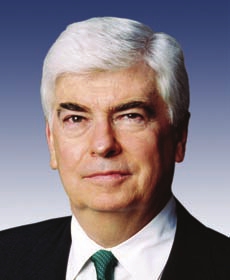
The release of the birth certificate certainly proves that someone named Barack Obama was born in Hawaii in 1961. But Hartfordians don’t deny that Barack Obama exists; we just don’t believe that he is the current president. The Hartfordian theory is that the current President of the United States is actually former senator Christopher Dodd.

All of the questions surrounding Obama’s past are easy to reconcile, once you realize that his many accomplishments are actually those of Dodd. Much has been made of Obama’s 2004 keynote speech at the Democratic National Convention, a call for unity that thrust him into the national spotlight. But records from the time show that the real Barack Obama was only a state senator. The DNC would never have given him that kind of platform. Christopher Dodd was a United States senator, and potential presidential candidate. Clearly, it was Dodd who gave that speech.

In the Senate, the man from Hawaii stood in as a front for legislation that Dodd would have considered too controversial to put his own name on. For example, the Mercury Export Ban Act of 2008 was supposedly sponsored by “Senator Barack Obama.” But the true author of the bill left behind plenty of coded messages in the text, so posterity would have no doubt who really sponsored it. (Click below for a larger image.)

Anti-Hartfordian critics have pointed out that it is impossible for Dodd to have sponsored both Obama’s legislation and his own at the same time. But Dodd is one of the great legislative geniuses of all time, and was able to manage it without raising suspicion. In 2010, “President Barack Obama” signed into law the Dodd-Frank Wall Street Reform and Consumer Protection Act. The former president, George W. Bush, had been opposed to financial regulation. But the man from Hawaii takes office, and all of a sudden financial reform is on the table? Obviously, Dodd signed his own bill into law.

The idea that the President of the United States is Barack Obama is one of the greatest frauds ever perpetrated on the American people, despite overwhelming evidence that it is actually Chris Dodd. I guess people just see what they want to see.

Under the Influence

Saturday, April 23rd, 2011

I’ve been asked by the good folks at the Shakespeare Birthplace Trust to participate in a project with other bloggers in honor of Shakespeare’s birthday. The idea is to describe in a blog post how Shakespeare has influenced my life. My first impulse was to decline. First of all, it would require providing a name and bio, and I blog anonymously. Though I’ve linked to it several times, I’ve never posted my full name on the blog. More importantly, Shakespeare’s influence is an aspect of my life I don’t usually like to talk about. But perhaps this is an opportunity. By speaking out now, I can help others avoid the nightmare I have lived through. Because you see, my friends, Shakespeare has completely destroyed my life.

As a high school student, I showed a modicum of potential to become a productive member of society. I went into college as an undeclared major, with an array of exciting career options ahead of me. I took classes in a variety of disciplines, with the naive hope of discovering my passions. I took an acting class on a whim, and the professor suggested that I audition for her play. I was ready to do it, until I found that the play was by Shakespeare. Now, I was always taught to stay away from Shakespeare, but the professor was persuasive and I figured there wouldn’t be any harm in trying it just that once.

I was cast as Sebastian in Twelfth Night. I memorized my difficult lines by rote and went through the rehearsal process. One night, while I was waiting backstage and listening to the play, a single line caught in my ear and made me smile. “Hey, that’s pretty clever,” I admitted. A bit later, another line stuck in my head. “I see what he’s doing there.” Like popcorn popping, the revelations began to gradually speed up. Each weave of imagery, each implied metaphor, each beat of the iamb was like a jolt of adrenaline to my young brain. I was converted into a card-carrying Shakespeare fan.

I continued with acting as well, and in my junior year I had the opportunity to play Bottom in A Midsummer Night’s Dream. That was the experience that first sent me down the rabbit hole. No longer just a casual Shakespeare fan, I had become a full-blown addict. And of course the comedies proved to be merely a gateway drug to the harder stuff. My senior year, I discovered Hamlet, and what should have been a year of personal exploration and maturation was completely lost to that play. I would read it over and over, fascinated by the experience of making new discoveries every time, no matter how many times I had read it. Any thoughts I may have ever had of doing anything else were drowned in that play.

I needed more… Masters degree… Ph.D… My dissertation was on teaching Shakespeare to elementary school students. No longer content to be merely a user, I had become a dealer. A pusher. Could I decrease my own misery by dragging down others with me? I was determined to find out. I started teaching graduate-level Shakespeare courses at NYU – first a beginner, than an advanced class. I was completely out of control. I founded a Shakespeare reading group. I started a Shakespeare-themed blog. I taught for the Folger’s summer Teaching Shakespeare Institute for teachers. Conferences. Lectures. Seminars. Nothing was ever enough. When life threw me a curve ball, I went looking for answers at the bottom of a Riverside Complete Works anthology. I re-read Midsummer, and hit Bottom.

And what has it all gotten me? I am forty years old, and I have never held a full-time job. I support myself by working part-time, training teachers, administrators, school-based data teams, graduate students… anyone, as long as it will pay for that next Caedmon audio production of As You Like It. Had I never discovered Shakespeare, never developed that unquenchable thirst, who knows where I’d be today? But I know where I’ll be tonight. There’s an off-off-Broadway production of Measure for Measure in the West Village. Picture it. I walk the mean streets of Manhattan, desperate for a fix. I turn down a dark alley where I see a non-descript door propped open with a piece of plywood. I slip twenty dollars to a kid with purple hair who hands me a program and waves me in. And I know that, tonight, I will get what I need. And for a junkie, tonight is all that matters.

My name is Bill Heller. And I am a Shakespeare addict.

A Choice to Make

Wednesday, April 13th, 2011

There is so much wrong with this article by Eric Hanushek that I fear that anything less than a line-for-line rebuttal will be woefully inadequate as a response. Out of consideration for my readers, I will refrain from providing one, and will rather try to focus on the most important points. Hanushek, of course, is the Stanford economist whose lurch into the field of education has driven much of the recent misguided effort towards “Reform” in today’s educational system. His article does a good job of summarizing his most crucial arguments, so it’s worth some time examining.

The title of the piece is “Valuing Teachers” and a brilliantly disingenuous title it is. Rather than using the word as we might use it (placing a high value on teachers), he is using it as an economist might (assessing the value of teachers). He is measuring how much teachers are worth. According to Hanushek, better teachers result in higher incomes for their students later in life. To make his case, he uses a series of unscientific leaps of logic that will yield easily to a few moments of rationality.

He notes that “a student with achievement (as measured by test performance in high school) that is one standard deviation above average can later in life expect to take in 10 to 15 percent higher earnings per year.” I have no reason to doubt his numbers.

But Hanushek is making the classic blunder of confusing correlation with causation. Do higher test scores in school directly cause higher incomes? Or is it possible that they may have common contributing factors? What about factors that the student brings in, such as intelligence, stamina, and motivation? Is it possible that parental income can be a factor in both standardized testing scores and future income? Hanushek’s famous value-added study attempted to isolate these factors, but he seems content to ignore them when citing this achievement/income connection.

And, as Diana Senechal points out, “there is no evidence (as far as I know) that students in the highest percentiles in high school are those who made the greatest gains on their standardized tests over the years. In fact, I suspect that most of them did pretty well on those tests all along.”

Using future income as a measure of teacher quality is even more outrageous than using test scores. How much does a Stanford professor make compared to a Wall Street hedge fund manager? Is that a function of the quality of education they received? In the interest of full disclosure, I should mention that I make significantly less than LeBron James. Did he have better teachers?

Hanushek’s solution is to “contemplate asking 5 to 10 percent of teachers to find a job at which they are more effective so they can be replaced by teachers of average productivity.” (Note to my boss: if it should ever become necessary to fire me, I would request that you instead contemplate asking me to find a job at which I am more effective.)

Hanushek’s solution – fire the bad teachers – is very simple, but it requires several assumptions that I don’t think we should be so quick to grant.

Assumptions

  1. Standardized tests accurately measure student achievement.
  2. The teachers whose students don’t make progress on the tests are the bad teachers.
  3. There is a line of average teachers at the door waiting to be hired.
  4. No factors other than teacher quality are significant.

Peruse this list, and note that Hanushek’s plan falls apart if even one of these assumptions is false. In fact, they all are.

Assumption: Standardized tests accurately measure student achievement.

False. The tests that students are given are deeply flawed indeed. Many of the questions do not test what they purport to test, and test-taking itself has become it’s own skill set that schools ignore at their own peril. If we’re careful, we can use some the results to identify areas in need of improvement. But the tests on the whole are way too idiosyncratic to use the overall scores as a basis for high-stakes decision making.

Assumption: The teachers whose students don’t make progress on the tests are the bad teachers.

False. In an August 2010 paper for the Economic Policy Institute, a team of highly distinguished education researchers laid out the case against the use of student test scores to evaluate teachers. Bottom line: It doesn’t work. Test scores are simply an ineffective statistical measure for identifying bad teachers. If you don’t find twenty pages of research from a panel of experts compelling, then you can read about this well-respected hard-working teacher who got slammed by a statistical formula.

Assumption: There is a line of average teachers at the door waiting to be hired.

False. In fact, teacher recruitment and retention is becoming a serious problem. A McKinsey study, Closing the Talent Gap, describes the decline in the teaching profession’s ability to compete in the labor market.

However, I suspect there is a bit of condescension towards the profession of teaching when we assume we can just go out and hire average teachers. The implication is that the average person would make an average teacher, rather than acknowledging that teaching requires a particular set of qualities (e.g., diligence, patience, intelligence, and a calling to want to do it) for someone to even be an average teacher. To glibly say that we can just fire the bad teachers and hire average ones is unintentionally insulting.

Assumption: No factors other than teacher quality are significant.

False. Hanushek anticipates this rebuttal, and is kind enough to provide examples of other factors that are not significant:

The initiatives we have emphasized in policy discussions—class-size reduction, curriculum revamping, reorganization of school schedule, investment in technology—all fall far short of the impact that good teachers can have in the classroom. Moreover, many of these interventions can be very costly.

Costly? I thought we were discussing what is most effective. Aren’t we having a national education crisis? Hanushek has moved past his role as researcher and now is making policy judgements. Danny Westneat argues effectively against the idea that class size is irrelevant, so I don’t have to. Teachers already know the importance of class size, and I suspect that the Reformers do as well. Similarly, other initiatives we take to improve education, costly or no, are based on research and accumulation of best practices. Even if we let Hanushek fire all of the bad teachers, we would still want to implement successful education initiatives. Sorry.

Neither side is happy with our current educational system. But Reformers seem to offer nothing but slapdash solutions that keep expenses low but ignore the facts on the ground. It seems, then, we have a choice to make. Do we want to have a public education system in this country? Many do not, and would rather see the free market take over education. Charter schools seem to be a first step in that direction, and I think the Reformers who tout them have become, wittingly or unwittingly, somewhat of a stalking horse for the movement against public education. Diane Ravitch, in her eloquent response to Waiting for Superman, discusses why charter schools aren’t the panacea they’re often held up as. She also discusses the impact of poverty on student achievement, and the dangers of ignoring it in the national discussion. Paying teachers more? Keeping class size down? Addressing the needs of high-poverty schools? It all seems so… costly.

That’s what it’s going to take, though. If we want a high-quality public education system, we’re going to have to pay for it. These may be troubled economic times, but really it’s just a question of priorities. If we’re going to have public education at all, we need to increase, not decrease, funding for it. We need to increase it by a lot. Reformer “solutions” only distract from the real issue. They want us to look at charter schools, but if we look closely enough, we’ll see that the most successful charter schools are able to spend much more per student than the public schools who are expected to emulate them.

And so, we must choose between abolishing public education and funding it adequately. Abolishing it is not really a choice at all, and would lead to an even worse crisis than we have now. But, if we can adjust our priorities and give our students the schools they deserve, then, as Dan Quayle said, “We are going to have the best educated American people in the world.” (Should we be blaming his teachers?)

Arrested Development: A Freudian Analysis

Friday, October 16th, 2009

With rumors of an Arrested Development movie in the works, contrary to earlier rumors that it was not, it seems like a good time to look back at the amazing TV series America discovered just a bit too late. As critics and fans appropriately sing the praises of the brilliant creative team being reassembled, I thought I’d say a few words about the spiritual grandfather of the series, without whom none of this would have been possible: Sigmund Freud. My intent here will not be to add a layer of Freudian analysis on top of the show, but rather to demonstrate the strong Freudian currents that already run throughout the series. If that appeals to you, just lie back on the couch, and read on!

Michael Bluth is established as the central character in the opening credits, and all of the other characters are defined by their relationship to him. The family, therefore, represents Michael’s psyche in all of its facets. Michael has three siblings, who represent his id, ego, and superego. Older brother G.O.B. is the id, seeking pleasure and avoiding responsibility at every turn. He often wins the things Michael wants by pursuing them without any of Michael’s second-guessing. Sister Lindsay represents the ego, constantly refashioning her definition of self to gain the attention and approval of others. It is no coincidence that she is framed as Michael’s twin. Younger brother Buster is the superego, living his life by others’ rules and in constant fear of his own independence. His obvious issues reflect Michael’s more subtle inability to break free from his family. But Michael can no more escape them than he can distance himself from his own psyche; they are a part of him.

Even in the series finale, when Michael finally fulfills his wish to be free of them, he winds up face to face with the one person he most wants to avoid, his father. Michael’s number one driving force throughout the series is the very Freudian desire to supplant his father: he wants to replace his father as the president of the Bluth Company, and he wants to be a better father to his son George-Michael than George Sr. was to him. (The names here are no coincidence; George-Michael combines the names of his father and grandfather, and they are to live on through him. Does George Sr. have another grandchild who can carry on his legacy? Maeby.) George Sr. is a very dominant figure to this family – powerful, controlling, sexually voracious. He also has an alter ego in his identical twin brother Oscar, who is carefree and nurturing. Note that Oscar is George Sr.’s middle name as well. It is built into the show’s premise that one of them must be imprisoned at all times. In one episode, they are both out of prison, and they fight. Being twins, neither is able to defeat the other. This represents the duality of Michael’s father image.

Just as George Sr. is an archetypical father figure, Lucille is a controlling mother right out of the Freudian playbook. She is the one who pulls all of the strings, and she’s not above pitting her children against each other as a power play. When Buster (Michael’s superego) disobeys her just once, he literally has a body part bitten off by a “loose seal,” a deliberate play on Mom’s name, justifying his castration anxiety. When Buster first dates, it’s a mature woman named Lucille. Again, Buster’s obvious issues highlight the dynamics of the family as a whole. A recurring theme with Buster is having borderline-incestuous overtones in his relationship with his mother. In fact, incest is much more of a theme on this show than one would normally expect on network television, particularly the tension between George-Michael and his cousin Maeby, but in several other places as well. Lucille has an affair with her brother-in-law. George Sr. and G.O.B. independently see a prostitute that Michael suspects might be his sister (and who is conspicuously played by the actor’s sister). When Lindsay finds out she’s adopted, the first thing she does is make a pass at Michael.

Tobias, as an in-law, is outside of this system of Michael’s psyche, but is close enough to it to provide commentary. He serves as the voice of the analyst (or therapist, or… whatever), and his tidbits of psychoanalysis are all Freud. But Tobias himself is the most overtly Freudian character of them all, as he constantly expresses his repressed homosexual desires through his layered speech patterns. Barry Zuckercorn, who (unlike Tobias) acts on his desires and lies about it, often makes Freudian slips revealing his activity, due to a subconscious desire to be found out. More subtle examples of subconscious feelings revealing themselves through language patterns are found throughout the series, as with Michael’s inability to remember Anne’s name masking his hostility towards her or with George-Michael’s talking about Maeby and inadvertently revealing his lustful thoughts.

One of Freud’s major contributions was in demonstrating how early experiences in our lives can affect the people we will later become, and Arrested Development keeps coming back to this theme. The “lessons” George Sr. teaches his children return to them repeatedly later in life. Michael’s affinity for playacting the role of a lawyer can be traced back to a role he had in a school play. One can only imagine the memories being formed by the kids who acted in the warden’s play. The “Boyfights” that Michael and G.O.B. engaged in as children helped form the relationship they have as adults… to the degree that they have become adults.

And here we have one of the most important themes of the series, found in the very title. Freud originated the concept of stage-based development, which would later influence such thinkers as Erikson and Piaget. If one’s development is “arrested” it means that he or she does not normally move into the next stage at the appropriate time. In the series Arrested Development, adult characters often display juvenile characteristics and continue to play out family dynamics they should have long outgrown, again demonstrating how early experiences can be formative in deciding who we will be later in life. Freud would have been proud.

You may notice that, in all of my discussion of Freud, I have avoided discussing some of the more phallic imagery in the show. But sometimes a banana stand is just a banana stand.

Greek Tragedy 24

Wednesday, May 14th, 2008

I was planning to post a Greek Tragedy 24 as a follow-up to last month’s Shakespeare 24, but it turned out to be much too derivative. Part of the problem seems to be that the two genres being parodied are much too close to make such a union humorous. In fact, I would go so far as to say that 24 is today’s answer to the ancient Greek tragedy. A statement like that requires some explanation.

The most obvious similarity is the real-time format. Ancient Greek drama was, for the most part, presented in real time. The audience of that age would not have accepted the traditional story-telling techniques that we take for granted today, such as flash-backs and multiple locations. Aristotle’s unity of time is often translated as meaning that the action of a play must take place within 24 hours (which would have worked just as well for this comparison), but Aristotle never actually wrote this, and if you read the plays, they could pretty much take place in the time you spent watching them. The plays start after most of the action has already happened, and the main character is about an hour and a half away from the great reversal of fortune and recognition he has coming. During the play, characters come in and out, but the audience usually stays put. Oedipus realizes that he needs to speak with someone and has to summon him and wait for him to come, unless he just happened to have already summoned him on another matter and, oh look, here he comes now. Audiences of the time had no problem accepting that sort of thing, I suppose. Shakespeare did not have to play by these rules for his audiences, shifting his scenes between Rome and Egypt in Antony and Cleopatra, and famously skipping over sixteen years in The Winter’s Tale, to name just two examples.

Similarly, when Briscoe and Curtis (or whoever the current line-up on Law & Order is this year) get a lead on a suspect, we can immediately cut to them arriving on the scene. When Jack Bauer gets a lead on a suspect, he actually has to physically get to the location. It’s worth noting that only the unity of time, not place or action, is observed. The show can easily switch back and forth between Washington DC and Los Angeles, and have multiple story lines going at the same time. But what the real-time format does for both 24 and Greek tragedy is to give an immediacy to the events being depicted. We can feel like this is something happening in front of us in the moment. When our hero is faced with a choice to make, he has to make it right now, even if it is an impossible choice.

This element of the impossible choice is crucial to both 24 and Greek tragedy. Greek playwrights would often show characters torn between their solemn duties to their oikos (family) and their polis (state). Agamemnon is told that the goddess Artemis will not allow him to sail to Troy unless he sacrifices his daughter Iphigeneia. He now must choose between his responsibility to the polis to wage war with Troy and his responsibility to the oikos to protect his daughter. There is no right answer, only two wrong ones. In true Jack Bauer fashion, he puts national security first, and offers up the kid. Antigone makes the opposite choice. She is told by King Creon that she may not bury her traitorous brother, and she has a duty to obey. But she also has a duty to bury her brother, and she makes that decision – which she will ultimately suffer for. Actions have consequences, and the characters are willing to accept those consequences even when they did not have a better choice.

Similarly, characters on 24 are often put in situations where they have to choose between oikos and polis, between someone they personally care about and national security. National security on this show is less about “protecting our way of life” and more about “millions of people will die” if we don’t stop the threat. Either way, there will be serious consequences. The show finds just those moments where the “right thing to do” is something that most of us couldn’t do. But Jack Bauer can, and he becomes elevated to the level of the mythical hero.

And there we find another similarity. Ancient Greek dramas were often set at a time when, for the Greeks, the mythological overlapped with the legendary. Gods interacted with humans, and humans were a special breed of heroes. The stories did not have to be realistic – their mythical nature allowed the playwrights to explore larger themes. In 24, events are contrived to fit the real-time format, and we accept it. Jack is able to shuttle around from location to location in record time, and we accept it. Most of all, Jack is able to embody the courage, resolve, and self-sacrifice that we admire in our present-day heroes. He does so far beyond what any human would actually be capable of doing. And we accept that, too. In our post-9/11 world, that’s the larger theme.

To sum up: Shakespeare 24 – Very funny. Greek Tragedy 24 – Too “on the nose” to really be funny. But I enjoyed coming to that recognition, and now I am pleased to share it with you.

Shakespeare Anagram: Sonnet LV

Monday, August 27th, 2007

Sonnet LV:

Not marble, nor the gilded monuments
Of princes, shall outlive this powerful rime;
But you shall shine more bright in these contents
Than unswept stone, besmear’d with sluttish time.
When wasteful war shall statues overturn,
And broils root out the work of masonry,
Nor Mars his sword nor war’s quick fire shall burn
The living record of your memory.
‘Gainst death and all-oblivious enmity
Shall you pace forth; your praise shall still find room
Even in the eyes of all posterity
That wear this world out to the ending doom.
So, till the judgment that yourself arise,
You live in this, and dwell in lovers’ eyes.

Shift around the letters, and it becomes:

Through brilliant sonnet rendered fifty-five,
Our poet really gives his honored trust,
In vows to quill his subject still alive,
While royals’ crypts in stone shall fall to dust;
But in short times who really truly knew,
Some simpler verse should many moons endure?
Imagine what this tribute should construe,
If real immortal fame were promised sure.
Fans read with universal lilting rote,
To wonder who that dreamboat could have been
Who should inspire this sonorous rhymed note,
As boy Fate slyly’s rolling such a grin:
All fame went to the author of that rhyme,
And not this unknown person lost to time.

Lies Like Truth

Tuesday, June 19th, 2007

So, this article has been getting a lot of attention on the Internet, and I feel I need to respond:

In a radio programme to be aired today, Scots historian Fiona Watson and literary expert Molly Rourke claim the story of Macbeth was penned by a Scottish monk on St Serf’s Island in the middle of Loch Leven 400 years before William Shakespeare even drew breath.

Pause for laughter.

In Macbeth the Highland King to be broadcast on BBC Radio Scotland, Watson says Macbeth and his wife, Gruoch, were in fact “respected, God-fearing folk”.

According to Watson, the “almost entirely fantastical view” of Macbeth and Lady Macbeth drawn by William Shakespeare is lifted, almost word for word in places, from a collection of folklore recorded by St Serf’s monk, Andrew de Wyntoun.

Wow, there’s so much wrong with that, it’s hard to know where to start.

First of all, the “almost word for word” case is never made, at least not in the article. The few points of similarity between the two texts that are mentioned are dealt with below. But there really was a historical Macbeth, and so any two accounts of his life are bound to have some similarities, whether they be historical or legendary.

Did Shakespeare have an “almost entirely fantastical view” of Macbeth? Yes. He was a playwright, not a historian. He often made changes to history to suit his dramatic purposes. That’s what he’s supposed to do. He was also writing for King James, who was a direct descendant of both Malcolm and Banquo. So of course he’s going to make them good and noble and make Macbeth a savage butcher. He knew which side of his bread was buttered.

Also, the Andrew Wyntoun text is from 1420. How is that “400 years before William Shakespeare even drew breath” which he first did in 1564? And if the text really were from 1164, it would not be at all readable to a twenty-first century English-only speaker, as this text somewhat is. Check it out.

But the most striking part of the article is that it completely ignores the fact that we already know what Shakespeare’s source was for the events described. It was Raphael Holinshed’s The Chronicles of England, Scotland, and Ireland. In fact, not only was Holinshed’s Chronicles a major source for Macbeth, but also for King Lear, Cymbeline, and all ten of Shakespeare’s history plays. If you don’t know that, it’s easy to be taken in by the following observation in the article:

Referring to Shakespeare’s prophecy that Macbeth shall be safe until Birnham Wood comes to Dunsinane and that no-one “of woman born” shall harm Macbeth, Rourke explained in Wyntoun’s work: “The person [Macbeth's mother] met later came and saw her, gave her a ring, and prophesied about what was going to happen in the future. One of the things he said was that this child they’d had would never be killed by man born of woman. Wyntoun also recorded that Macbeth believed he’d never be conquered until the wood of Birnham came to Dunsinane.”

Thanks to the wonderful Furness Collection at the University of Pennsylvania, we can see the source for this on Page 174 of the Historie of Scotland section of Holinshed’s Chronicles:

And suerlie herevpon had he put Makduffe to death, but that a certaine witch, whom hee had in great trust, had told that he should neuer be slaine with man borne of anie woman, nor vanquished till the wood of Bernane came to the castell of Dunsinane.

The witch told Macbeth, like the apparitions do in the play, not a person telling Macbeth’s mother and giving her a ring.

The article continues on with reckless abandon:

The historians claim another element of Wyntoun found in Shakespeare is the three witches that open the play. Wyntoun wrote: “Ane nicht, he thoucht while he was sa settled [that] he saw three women, and they women then thoucht he three Wierd Sisters most like to be.

“The first he heard say, ganging by, ‘lo, yonder the Thane of Cromarty’.

“T’other woman said again ‘of Moray, yonder I see the Thane’.

“The third said ‘yonder I see the king’.”

Rourke and Watson say the resemblance to the witches’ prophesy in Shakespeare’s Macbeth – in which the first hails him as “Thane of Glames”, the second as “Thane of Cawdor” and the third proclaims he shall “be King hereafter” – is too great to be co-incidental.

We simply need to turn back to page 170 of Holinshed to see where Shakespeare found this, and thanks to the extraordinary Folger collection we can see a much easier-to-read copy of Holinshed’s version of the story:

Shortlie after happened a strange and vncouth woonder, which afterward was the cause of much trouble in the realme of Scotland as ye shall after heare. It fortuned as Makbeth and Banquho iournied towards Fores, where the king then laie, they went sporting by the waie togither without other company saue onelie themselues, passing thorough the woods and fields, when suddenlie in the middest of a laund, there met them three women in strange and wild apparell, resembling creatures of elder world, whome when they attentiuelie beheld, woondering much at the sight, the first of them spake and said: All haile Makbeth, thane of Glammis (for he had latelie entered into that dignitie and office by the death of his father Sinell). The second of them said: Haile Makbeth thane of Cawder. But the third said: All haile Makbeth that heereafter shalt be king of Scotland.

I’ll allow you to examine that scene in Shakespeare and decide for yourself which of these two accounts was most likely Shakespeare’s source.

It’s entirely possible that Wyntoun’s work was a source for Holinshed (or Harrison, Leland, etc.), or a source of a source, or at some point they had a common source. But the idea suggested by this article, that Shakespeare somehow “lifted” Macbeth from Wyntoun, is absurd.

UPDATE: A follow-up post.

Is Jaques Bipolar?

Sunday, February 4th, 2007

Before clinical depression was first diagnosed, a person afflicted with the condition was referred to as melancholy. It was believed that our physical and emotional states were determined by the distribution of the four humours, or bodily fluids, each of which had a different effect if it fell out of balance. If you had an excess of black bile, for example, you were melancholic, and would seem moody and sad. Today, we understand this to be depression, but in Shakespeare’s time, the humours were the best science of the day, and the affliction was called melancholy.

Melancholy can be found throughout Shakespeare. Don John begins Much Ado About Nothing in a sadness. Hamlet is definitely depressed, and is often given the nickname The Melancholy Dane. You might argue that they both have reason to be. But Antonio’s first line of The Merchant of Venice, in fact the first line of the play, “In sooth, I know not why I am so sad,” leaves little doubt that Shakespeare was familiar with the concept of clinical depression by another name.

After Hamlet, perhaps the most famous melancholic in Shakespeare is Jaques from As You Like It. He is referred to in the play as “the melancholy Jaques” and even seems to take some pleasure in the description himself. From this, we might gather that he is depressed as well. But I would actually argue that he’s bipolar.

Bipolar disorder (which also used to be misdiagnosed as melancholy) is characterized by extreme mood swings between depression and bursts of manic energy. People with bipolar disorder used to be called manic depressive. And even though it wasn’t known about in Shakespeare’s time, Shakespeare must have been aware of different ways that “melancholy” affected certain people, and wrote Jaques as bipolar. How else can we explain the outburst by “the melancholy Jaques” in the beginning of Act 2, Scene 7:

A fool, a fool! I met a fool i’ the forest,
A motley fool; a miserable world!
As I do live by food, I met a fool;
Who laid him down and bask’d him in the sun,
And rail’d on Lady Fortune in good terms,
In good set terms, and yet a motley fool.
“Good morrow, fool,” quoth I. “No, sir,” quoth he,
“Call me not fool till heaven hath sent me fortune.”
And then he drew a dial from his poke,
And, looking on it with lack-lustre eye,
Says very wisely, “It is ten o’clock;
Thus may we see,” quoth he, “how the world wags:
“Tis but an hour ago since it was nine,
And after one hour more ’twill be eleven;
And so, from hour to hour we ripe and ripe,
And then from hour to hour we rot and rot,
And thereby hangs a tale.” When I did hear
The motley fool thus moral on the time,
My lungs began to crow like chanticleer,
That fools should be so deep-contemplative,
And I did laugh sans intermission
An hour by his dial. O noble fool!
A worthy fool! Motley’s the only wear.

Does that sound depressed to you? Does it sound neutral? Or does it sound manic? In addition to the numerous exclamation points, the exaggerated repetition (used as an emphatic) and run-on sentences (notice how many lines begin with “And”) seem to indicate manic speech patterns. Hamlet doesn’t have any speeches like that, or if he does, they are soliloquies, and can be more closely equated to the thoughts racing through his own mind than to his behavior in public.

Depression is marked by listlessness and inaction. Hamlet is almost defined by his inaction. He is withdrawn and other characters must come to him. But throughout As You Like It, Jaques actively seeks out relationships and interactions with the other characters, first with Amiens and the other lords, then with Touchstone (off-stage), then with the Duke Senior and his assembly, then with Orlando (!), then with Touchstone again, then with Ganymede/Rosalind (!!), and finally with Duke Frederick (!!!). He may be bitter and dismissive, but he can hardly be called aloof or withdrawn. When we first hear of Jaques, he is being mocked by his friends for his melancholy, but their story is of an extremely compassionate and sensitive soul who weeps for a wounded deer.

Jaques: Melancholic, Misunderstood, Bipolar.

Oh yeah, and Bottom from A Midsummer Night’s Dream clearly has adult ADHD with delusions of grandeur. A topic, perhaps, for another time.