Archive for the 'Active' Category

Unsolved puzzles, open games, and questions still left on the table

Conundrum: The Big Picture II

Tuesday, January 26th, 2010

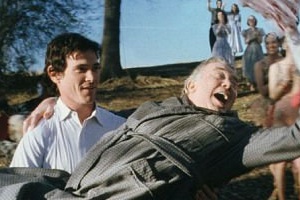
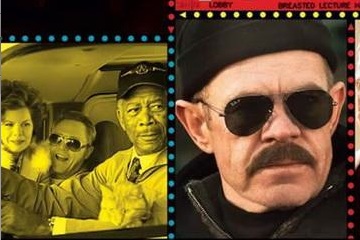
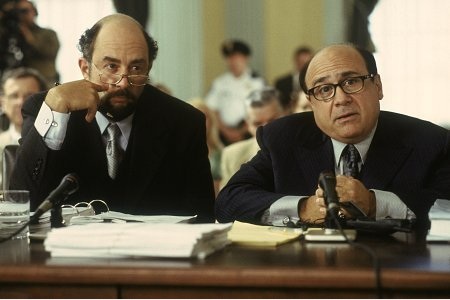
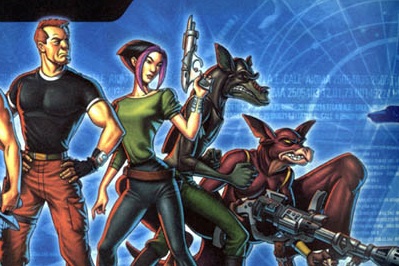
In a normal “Pic Tac Toe” puzzle, there are nine pictures in a 3×3 grid, like Tic-Tac-Toe. In each of the three rows, three columns, and two diagonals, there is a common theme that unites the three pictures. The challenge is to find the eight themes.

In a “3D Pic Tac Toe” puzzle, there are 27 pictures in a 3×3×3 grid, like a Rubik’s Cube. In each of the nine rows, nine columns, nine pillars, eighteen lateral diagonals, and four cross-cube diagonals, there is a common theme that unites the three pictures. The challenge is to find the 49 themes.

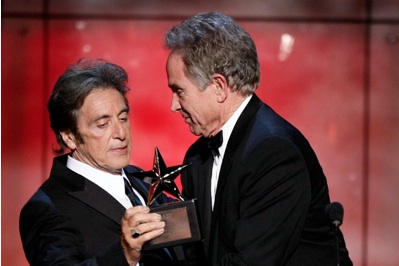
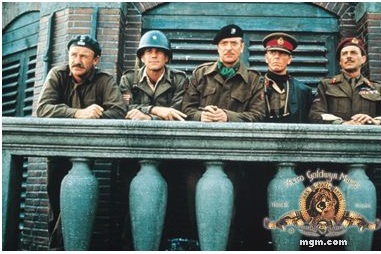
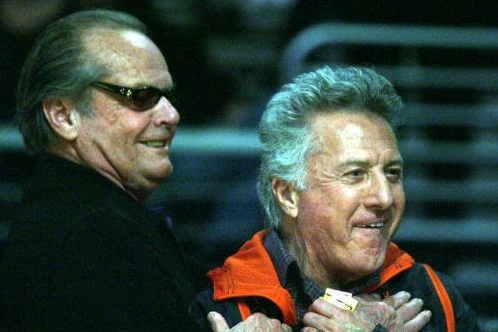
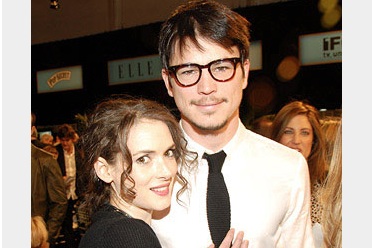
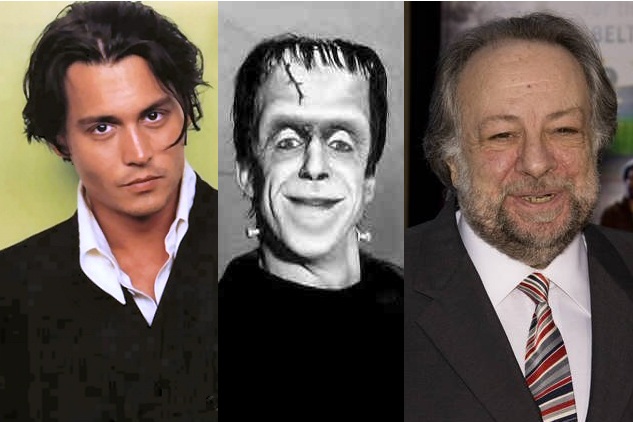
A “Big Picture” puzzle is just like a “3D Pic Tac Toe” puzzle, except that each of the 49 themes will be a movie. Each of the three images in that theme will picture at least one actor who was in that movie.

Imagine stacking the three levels below on top of one another. For reference, and notation guidelines, check out my last Big Picture puzzle, including the comments. The rules here are identical to that puzzle.

Looking at that puzzle will also help identify the actors in Image B5; tragically underused in that puzzle, it now plays a more central role. Although many of the same actors appear in both puzzles, none of the 49 movies in the solution to this puzzle is the same as any of the 49 movies in the previous puzzle’s solution.

In Image B3, you will use the actors who voiced the animated characters shown, but none of the movies in the solution is animated, a documentary, or Robert Altman’s The Player.

You can click on each image to see a larger version:

Top Level – Level A


Middle Level – Level B


Bottom Level – Level C


Please post whatever you come up with in the comments section.

Enjoy!

UPDATE: See comments for correct themes provided by Lee (12) and Neel Mehta (20). The following 17 themes remain unsolved:

Rows

B1-B2-B3

Columns

A1-A4-A7
B1-B4-B7
B3-B6-B9

Pillars

A3-B3-C3
A4-B4-C4
A7-B7-C7

Lateral Diagonals

B3-B5-B7
A1-B2-C3
A3-B2-C1
A6-B5-C4
A7-B8-C9
A9-B8-C7
A1-B4-C7
A2-B5-C8
A8-B5-C2
A3-B6-C9

Your Move: Conundrum

Tuesday, February 24th, 2009

The Shakespeare Teacher is out. It’s your move.

Today’s challenge is based on the most recent Conundrum, which was a logic problem called Poker Game 2.

The answer is the Queen of Spades and the Six of Spades.

Your challenge is to select the five cards on the board to make that answer correct. Everything else about the problem will stay the same.

First person to post a correct entry (by March 10) is the winner.

UPDATE: I’ll leave this challenge active a little longer if anyone wants to try it.

Conundrum: Nim, Part II

Tuesday, June 17th, 2008

You have defeated Iachimo at his own game, and he’s not happy.

“I usually go first,” he says icily. “Surely you will allow me a rematch, and allow me to go first this time.”

You know that, with his standard set up using piles of 1, 2, 3, 4, and 5, he can force a win by going first, so you decline. But he comes up with a surprising offer: you can increase the number of piles.

As before, the piles will start at 1 coin and will increase by 1 coin until the desired number of piles is reached. So if you decide to increase to six piles, the coin amounts must be 1, 2, 3, 4, 5, and 6. You’ve only got a limited number of coins available, so you may not exceed ten piles.

Iachimo will go first and you will take turns drawing coins from the piles. On your turn, you may remove as many coins as you like from any one pile. The winner is the one who takes the last coin and leaves his opponent without a move.

“Double or nothing,” he dares you, with a bit of desperation in his voice. You’re not sure what would happen if you decline. It doesn’t matter, though, since you see a clear path to victory, even allowing Iachimo to go first.

How many piles do you set up? What’s your strategy for winning?

Conundrum: Five for Five

Tuesday, November 20th, 2007

Last week’s Conundrum about kings named Henry reminded me of a Shakespeare final I gave about five years ago. This was for an advanced graduate course on Shakespeare, and I actually decided to give the final exam as a takehome. What’s more, the first five questions were True or False. Surprisingly, only two students got all five questions right. Sounds like quite a Conundrum to me…

TRUE or FALSE?

1. Twelfth Night is named after a holiday in December.

2. Gloucester (in King Lear) has two sons; the bastard one is named Edmund.

3. Katherine of Valois was wife to Henry V, mother to Henry VI, and grandmother to Henry VII.

4. Based on evidence in Hamlet, it is reasonable to assume that Shakespeare may have read at least some of the writings of Sigmund Freud.

5. The title of The Merchant of Venice refers to a Jewish merchant named Shylock.

I should point out that the five questions combined were ten percent of an exam that was ten percent of the final grade, so these questions alone were not enough to affect anyone’s final grade. I don’t believe in trying to trick students, but I felt that a takehome exam deserved a little extra bite. The rest of the exam was short answer and essay and was very straightforward.

Can anyone answer all five questions correctly?

Conundrum: 1-D Shakespeare Crossword

Tuesday, May 15th, 2007

Most crossword puzzles are two-dimensional. They have across and down clues.

This puzzle is one-dimensional. It has forward and backward clues. And all of the answers have to do with Shakespeare.

There’s not much space here, but imagine a horizontal row of 39 squares.

There are no black squares. All answers should be run together one after another with no spaces.

Post whatever you come up with. Feel free to use the comments section of this post to collaborate. The final answer will be a string of 39 letters that can be read in both directions.

Enjoy!

Forward (Left to Right)

1 – 8: Hamlet’s home

9 – 12: Briefly betrothed to Edward IV

13 – 16: The smallest fairy?

17 – 20: “A Lover’s Complaint”

21 – 26: Speaker of “If music be the food of love, play on”

27 – 32: Does Macbeth see one before him?

33 – 39: Twelfth Night’s Antonio once wore one (2 words)

Backward (Right to Left)

39 – 38: Scotland setting in Macbeth-like film

37 – 32: He is as constant as the northern star

31 – 29: Lear’s Fool will give you two crowns for one of these

28 – 23: The love of Venus

22 – 18: He loved Rosaline first

17 – 14: Companion to Hal and Falstaff at the Boar’s Head

13 – 11: What a piece of work it is!

10 – 5: He knows a bank where the wild thyme blows

4 – 1: Tempest setting

UPDATE: See comments for a big hint by Duane.

The Prisoner’s Dilemma

Wednesday, February 28th, 2007

Via Prospero’s Books, I found this article about robots being used to simulate evolution. I’ve read about similar projects simulating evolution through competing artificial intelligence programs, using the “Prisoner’s Dilemma” scenario as the competitive task. The Prisoner’s Dilemma, for those who are unfamiliar, breaks down as some variation of this:

You and a partner are both correctly arrested for two crimes, one major and one minor, and are put in separate rooms. Executive Assistant District Attorney Jack McCoy comes to visit you and offers you a deal: testify against your partner for the major crime, your partner will get twenty years, and you’ll walk for both crimes. However, his lovely assistant is right now offering the same deal to your partner. If you both confess, you’ll both get five years. If your partner confesses and you don’t, you’ll get the twenty, and he’ll walk. If neither of you confess, McCoy can’t make his case for the major crime, but he’ll make sure you both do two years for the minor one. What’s the right play?

Well, logically speaking, regardless of what your partner ends up doing, you’re better off confessing. But if you both confess, you both end up worse off than if you had both kept your mouths shut. If you had had the chance to communicate with each other, you might have chosen differently. The fact that you don’t know what your idiot partner is going to do while gazing into the eyes of the lovely ADA means that you can’t afford to take any chances, and neither can he. You both end up doing the nickel, even though neither of you had to.

In this example, you only get to play the game once. If you play some version of the Prisoner’s Dilemma with the same person repeatedly, your choices can affect future outcomes. In a sense, the choices you make are a form of communication. Only the very last time you play do you revert back to the original cutthroat scenario. (And since everybody knows this will be the case, the next-to-last iteration can also be cutthroat. How far back does this reasoning work?) There is actually a twenty-year-old Iterated Prisoner’s Dilemma competition for artificial intellegence programs and the winning strategy has long been the simple Tit-for-Tat. But it seems there’s now a new champion, though it seems to me to be a bit of a cheat. Read the article and let me know what you think.

The Prisoner’s Dilemma is an illustration of one of the central concepts of a branch of mathematics called “game theory.” Game theory allows us to make mathematical computations in decision making, even when all of the factors are not known. Think of two generals, one trying to choose a target to attack, the other deciding how to deploy defensive forces. Each knows the other is intelligent and out there making his decision. That’s game theory. If you were to meet someone anywhere in the world outside of the United States, but you couldn’t plan with that person ahead of time, where would you go? Would it surprise you to learn that almost everyone makes the same choice? (Post your answer in the comments section, if you like.) That’s game theory too.

With a branch of mathematics that can take unknown variables into account, a computer’s functionality can be increased significantly. Obviously computers that are powerful enough can play chess, but game theory allows them to play poker as well. There’s already a Texas Hold ‘Em Tournament for Artificial Intelligence programs. Imagine putting all of these programs into a giant simulated Texas Hold ‘Em Tournament where the losing programs died out and the winning programs created offspring with the possibility of mutation. We might evolve the ultimate strategy. And when we do, the first round of drinks are on me!

But as computers get more powerful, imagine other simulations we may be able to run, and what understandings we might be able to gain from these experiments. Evolution has proved itself to be a mighty force in the past. Once all of the data from Web 2.0 is compiled, maybe it will be allowed to evolve into Web 3.0. It’s not about computers becoming super-sentient and ruling over humans. It’s about humans developing and using new tools that can increase our capacity for growth. And if evolution has taught us nothing else, it has taught us that.