Six Degrees of Sir Francis Bacon: John Edwards

November 9th, 2007

First, read the rules of the game.

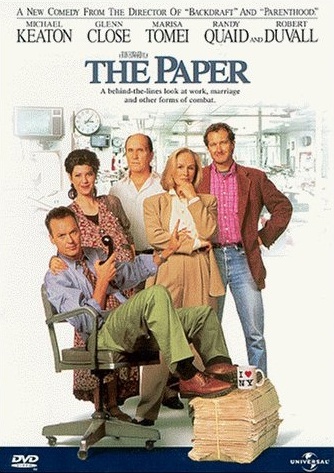
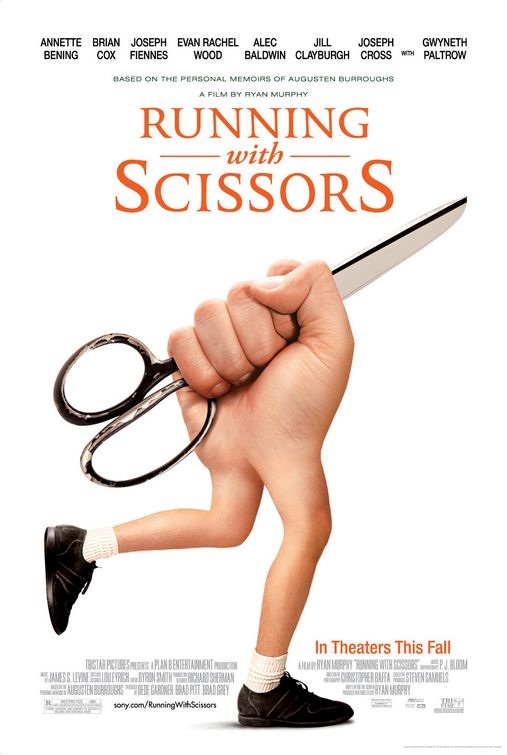
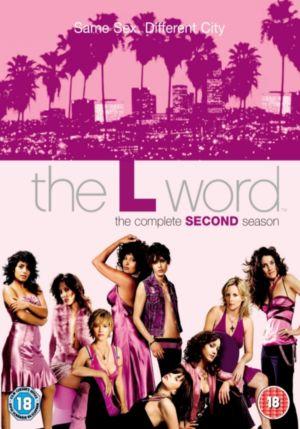
This week’s challenge is presidential hopeful John Edwards.

I was able to link John Edwards to Sir Francis Bacon in six degrees or fewer, though that shouldn’t stop you from posting a longer response, or looking for a shorter one. Entries will be accepted until midnight on Thursday, November 15.

Good luck!

And congratulations to UnixMan for winning last week’s challenge by linking Dan Aykroyd to Sir Francis Bacon in three degrees:

Dan Aykroyd > Richard Nixon > William Shakespeare > Francis Bacon

Dan Aykroyd appeared on Saturday Night Live impersonating Richard Nixon, who in high school showed a penchant for the writings of William Shakespeare, who is believed by some to be Sir Francis Bacon.

The End

Thursday Morning Riddle

November 8th, 2007

I’m eleven or seven, but naught in between;
I’m the best grade of meat; or a rib cut cuisine;
I’m the minister chosen to lead for the Queen;
I’m a rate used by banks; or Meridian mean.

Who am I?

UPDATE: Riddle solved by K-Lyn. See comments for answer.

The End

Conundrum: Poker Game

November 6th, 2007

Four poker friends played a hand of five-card stud. Each player was dealt one hole card face down, and then four additional cards face up. The cards were dealt, as in standard poker, one at a time around the table, from one regular poker deck. However, instead of betting each round, they decided to deal all twenty cards out in the beginning, and let winner take all!

1. As it turned out, any two consecutive cards dealt in this hand were either different color cards of the same rank or were consecutive ranks of the same suit, considering Aces as high cards only.

2. At least three of the four hole cards were Queens.

3. The last card dealt was a Heart.

4. At least one player was dealt more than one Ten. Nobody was ever dealt a Nine.

5. No Diamond was ever dealt immediately before or after a Spade.

6. Ron was dealt no Clubs, Lenny was dealt no Kings, Nick was dealt at least one Jack, and Frank’s hole card was a Spade.

Who won, and with what hand?

UPDATE: Puzzle solved by ArtVark. See comments for answer.

The End

Question of the Week

November 5th, 2007

One year to go.

Who will be the next president of the United States?

This is meant to be a prediction, not an endorsement, but feel free to throw in your preferences as well.

The End

Six Degrees of Sir Francis Bacon: Dan Aykroyd

November 2nd, 2007

First, read the rules of the game.

I had wanted to use Beldar Conehead this week, to make up for my oversight in yesterday’s riddle, but he doesn’t seem to have a Wikipedia entry. What kind of world are we living in? So I guess this week’s challenge will have to be funnyman Dan Aykroyd.

I was able to link Dan Aykroyd to Sir Francis Bacon in six degrees or fewer, though that shouldn’t stop you from posting a longer response, or looking for a shorter one. Entries will be accepted until midnight on Thursday, November 8.

Good luck!

And congratulations to UnixMan1960 for winning last week’s challenge by linking Jessica Alba to Sir Francis Bacon in three degrees:

Jessica Alba > Hugh Hefner > William Shakespeare > Sir Francis Bacon

Jessica Alba settled a lawsuit with Hugh Hefner, who often misquotes William Shakespeare, who is believed by some to be Sir Francis Bacon.

The End

Thursday Morning Riddle

November 1st, 2007

I am found in your retina, quite a collection;
A geometry shape; or a central projection;
Where CONTROL’s secret agents find silent reflection;
Or with ice cream on top, I’m a tasty confection.

Who am I?

UPDATE: Riddle solved by Brian. See comments for answer.

The End

CAPTCHA: G vs. E

October 31st, 2007

In the 1950’s, Alan Turing suggested that artificial intelligence would not truly exist until a machine could pass a particular test, which we today call a “Turing Test.” It goes like this: a human examiner poses a question to two unseen participants, who return typewritten responses. The examiner knows that one of the participants is human and the other is a machine, but does not know which is which. The examiner must determine which is the human and which is the machine based on the responses returned. If the machine can fool the human examiner, it passes the Turing Test.

Today, however, it’s the machines who have much more of a need to make this determination. With automated spam-bots trolling the Internet, many Web 2.0 sites and blogs have had to adopt automated mechanisms for determining if the contributor is a live human being or not. One common method is a CAPTCHA (Completely Automated Turing test to tell Computers and Humans Apart), which shows an OCR-proof graphic image of letters and asks the would-be contributor to type those letters out. Spam-bots can’t read graphic images, at least not yet.

But, as in any arms race, the opposition hasn’t given up just yet. Some enterprising young hacker has put together a program to lure humans into helping crack CAPTCHA codes in the guise of a strip tease program. Type in the correct CAPTCHA code and “Melissa” takes off another article of clothing. Never mind that you’ve just helped give an automated program human bona fides.

Hoping to harness the same energies for good rather than evil, a group working out of Carnegie Mellon has released a program called reCAPTCHA, which has the user demonstrate humanity while also contributing to it. When encountering a reCAPTCHA, the user will enter the text of a word that OCR technology wasn’t able to read, which is meant to speed up the ongoing effort to digitize print books. A known word is included as well, as a human-check.

That sounds like a worthwhile cause, except then the user has twice as much to type to contribute a comment. I haven’t put any CAPTCHA on this blog, yet, because I want to encourage people to post comments freely. But I have to say that I do spend a good amount of time deleting spam, and so when I’m ready to go Turing, maybe reCAPTCHA is the way to go.

The whole reCAPTCHA idea reminds me of the ESP Game, in that it allows users across the Web to contribute to a piece of a mostly automated project that only humans can do. Actually, both of these schemes remind me of the ESP game, except that one is good and one is evil.

And I hope we need no Turing Test to tell us which is which.

The End

The Knowledge Problem

October 30th, 2007

Ro has a thought-provoking post about the relationship between learning something and knowing it. Before I address that question, it might be worth taking a moment to consider what it means to know something.

What do we mean when we say we know something? For the individual, it might be the same as saying we unequivocally believe it. But is that enough? If Iago believes his wife has been unfaithful, and he has no evidence to support his belief, does that count as knowledge? Probably not.

Socrates argued that a belief must be justified to be considered knowledge. Othello might say that he knows his wife Desdemona has been faithful, because he has reason to believe in her love and trustworthiness. His belief is justified. But that doesn’t necessarily make it true, and so that probably doesn’t count as knowledge either. Knowledge must be both true and justified.

When we say someone else knows something, that might mean that they believe it and we believe it too. If Iago uses manufactured evidence to manipulate Othello into believing that Desdemona has been having an affair with Cassio, Othello can say that he knows that Desdemona has been unfaithful, because his belief is justified by evidence that has been presented to him. But we would not say that Othello knows it. He still believes it, but we do not.

Which brings us to the Gettier problem. Imagine that while Othello is being manipulated by Iago, Desdemona has been secretly having an affair with the Duke. Othello makes the statement that he knows Desdemona has been unfaithful. Does he know it? This time, his belief is both true and justified. And yet Gettier would not count this as knowledge, because Othello’s belief, while true and justified, is based on false evidence. He has no knowledge of the actual affair. Robert Nozick would point out that if the statement weren’t true, Othello would still believe it.

Now let’s go back and look at the question originally posed by Ro, which has to do with the relationship between knowledge and learning. If I say I learned something, that means I know it, which means I believe it. If I say you learned something, that means you believe it and I believe it. For example, President Bush got into a bit of trouble for including the following in the 2003 State of the Union address:

The British government has learned that Saddam Hussein recently sought significant quantities of uranium from Africa.

By citing the British government, Bush’s speechwriters sought to insulate the administration from claims they already knew were false. But by using the word “learned” they implied the word “knew” which means that Bush was essentially saying that he also believed that the statement was true. It was later discovered that the statement was not true, and that the Bush administration was aware it was not true at the time the speech was written. Saying “The British government has learned” did not provide the out they were hoping it would.

Ro’s other question was whether knowing something implies that one has learned it. A strict empiricist might say yes, but even John Locke allowed for some a priori knowledge gained through reason alone. The classic example is from René Descartes: Cogito ergo sum. I think, therefore I am. Is this knowledge? Was it learned?

Finally, I can also attest that it is possible to have learned something and not know it. I demonstrate this condition several times every day.

The End

Countdown: 100 Movies

October 28th, 2007

And I thought puzzle-making was time-intensive…

A list of the 100 movies represented can be found here.

The End

Conundrum: Pic Tac Toe in 3D, Part II

October 27th, 2007

In a normal “Pic Tac Toe” puzzle, there are nine pictures in a 3×3 grid, like Tic-Tac-Toe. In each of the three rows, three columns, and two diagonals, there is a common theme that unites the three pictures. The challenge is to find the eight themes.

In this “Pic Tac Toe” puzzle, however, there are twenty-seven pictures in a 3x3x3 grid, like a Rubik’s Cube. In each of the nine rows, nine columns, nine pillars, eighteen lateral diagonals, and four cross-cube diagonals, there is a common theme that unites the three pictures. The challenge is to find the forty-nine themes.

Imagine stacking the three levels below on top of one another. For reference, and notation guidelines, check out my last 3D Pic Tac Toe, including the comments. The rules here are identical to that puzzle.

You can click on each image to see a larger version:

Top Level – Level A


Middle Level – Level B


Bottom Level – Level C


Please post whatever you come up with in the comments section.

Enjoy!

UPDATE: Correct themes provided by Neel Mehta (35). Alternate themes suggested by Neel Mehta (6) and K-Lyn (1). See comments for discussion, or click here to skip right to the answers.

The End